
Marine flake ice machines for commercial fishing vessels
Saltwater flake, freshwater flake and cubed ice machines, supplied, installed, serviced and repaired for fishing boats across East Gippsland.
What ABL does for fishing vessels
ABL supplies, installs, services and repairs ice machines on commercial fishing vessels. That covers saltwater flake machines, which make ice from seawater, and freshwater machines that make flake or cubed ice. We work on boats in port at Lakes Entrance, Paynesville, Metung and Bairnsdale. Operating out of Lakes Entrance and servicing the entire East Gippsland coast, we understand the unique requirements of the commercial fishing industry.
If the machine has stopped or is making less ice before a trip, call the emergency line and tell us the make and model, what it is doing and where the boat is berthed. While we can't service vessels at sea, we provide 24/7 emergency phone support for troubleshooting and guidance. For urgent repairs in port or harbor, we prioritize commercial fishing vessels to get you back fishing quickly. Our technicians carry common spare parts for major brands and can often complete repairs the same day.
For a new or replacement machine, an upgrade of an older system, or planned servicing, ask for a quote. As at November 2026, the quote is free.
Emergency Marine Service
Ice machine breakdown before a trip? We offer priority emergency service for commercial fishing vessels to minimize downtime and lost revenue.
Coolrooms, freezer rooms and refrigeration ashore are on the commercial refrigeration page. Ice machines for hotels, clubs and restaurants are on the ice machines for venues page.
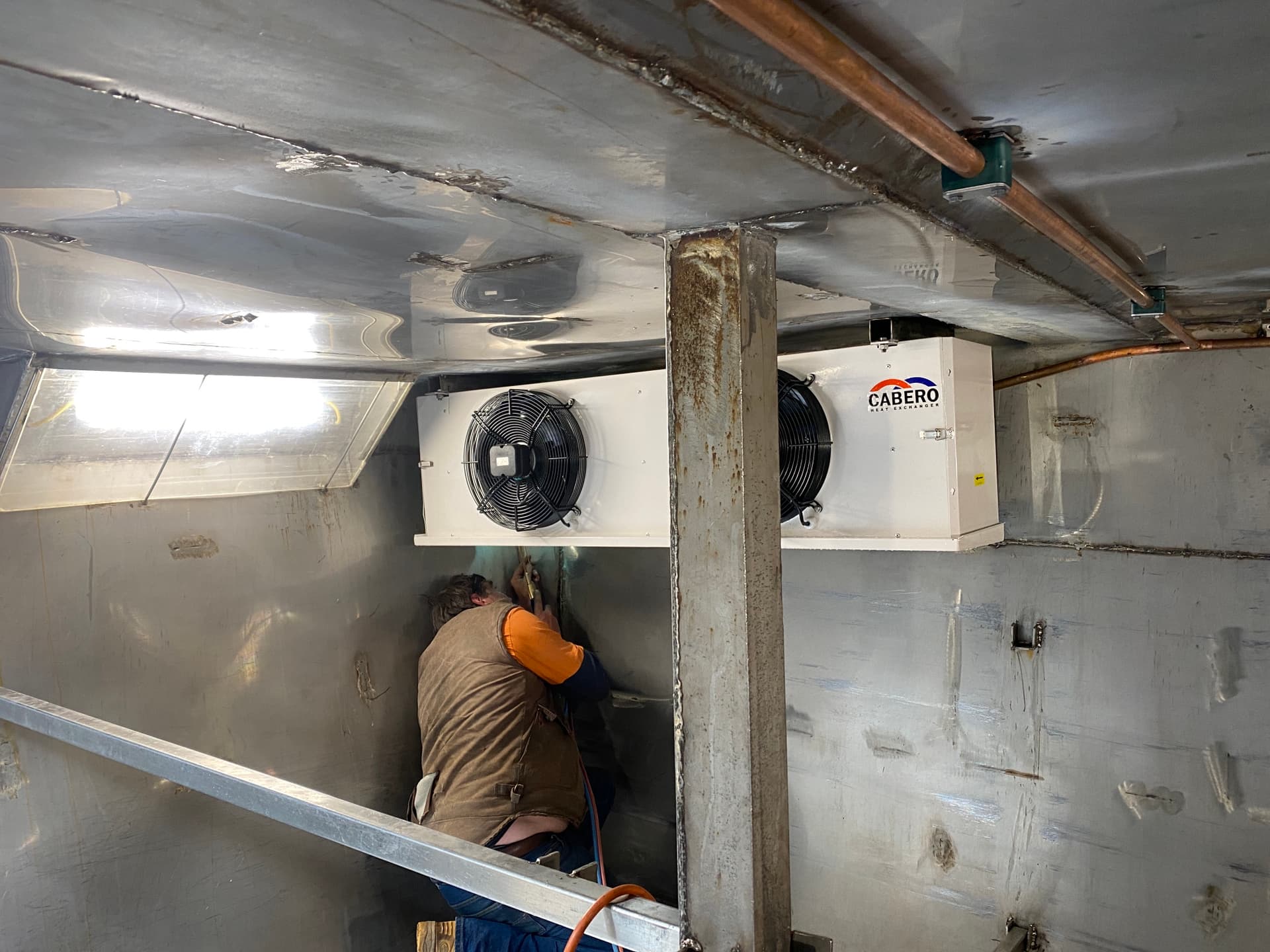
Seawater flake, freshwater flake or cubed ice?
The ice machine most often fitted to a fishing boat makes flake ice: thin, dry pieces scraped off a refrigerated drum, ready to pack around the catch. The bigger choice is the water the machine freezes.
| What to weigh up | Seawater flake | Freshwater flake | Freshwater cubed |
|---|---|---|---|
| Water it freezes | Seawater, drawn in through a strainer | Fresh water from the boat's tanks or a shore supply | Fresh water from the boat's tanks or a shore supply |
| When it can make ice for the catch | Once the boat is clear of the harbour and in clean water | Wherever it has drinking-quality water, in port or at sea | Wherever it has drinking-quality water, in port or at sea |
| The ice | Colder than freshwater ice and softer. It can look wet even when it is cold. | Thin, dry flakes that pack closely around fish | Larger, harder pieces |
| Watch for | It has no fixed melting point, so check the fish temperature: thin-skinned fish can partly freeze or take up salt. | It uses fresh water the boat has to carry or take on in port. | Packed around fish, it can bruise them. It suits the top of the catch better. |
| Buying and running | Usually dearer to buy and run than a freshwater machine, and the same machine makes less ice from seawater | Usually cheaper to buy and run than a machine built for seawater | Usually cheaper to buy and run than a machine built for seawater |
Which suits your boat comes down to the length of the trip, the catch, the space and power on board, and how easily you can carry fresh water. We help you choose the right machine for your catch and trip length when we quote.
The size comes from the most ice you use at your busiest, how long the trip runs and how the ice is stored. A machine's rated output applies at the water and air temperatures on its data sheet, so it makes less ice in warm seawater or a hot machinery space. We help calculate your requirements based on your actual fishing operations.
Free Consultation Available
Not sure which system is right for your vessel? We'll visit your boat, assess your requirements, and provide expert recommendations based on your actual fishing operations and budget.
More in the guides
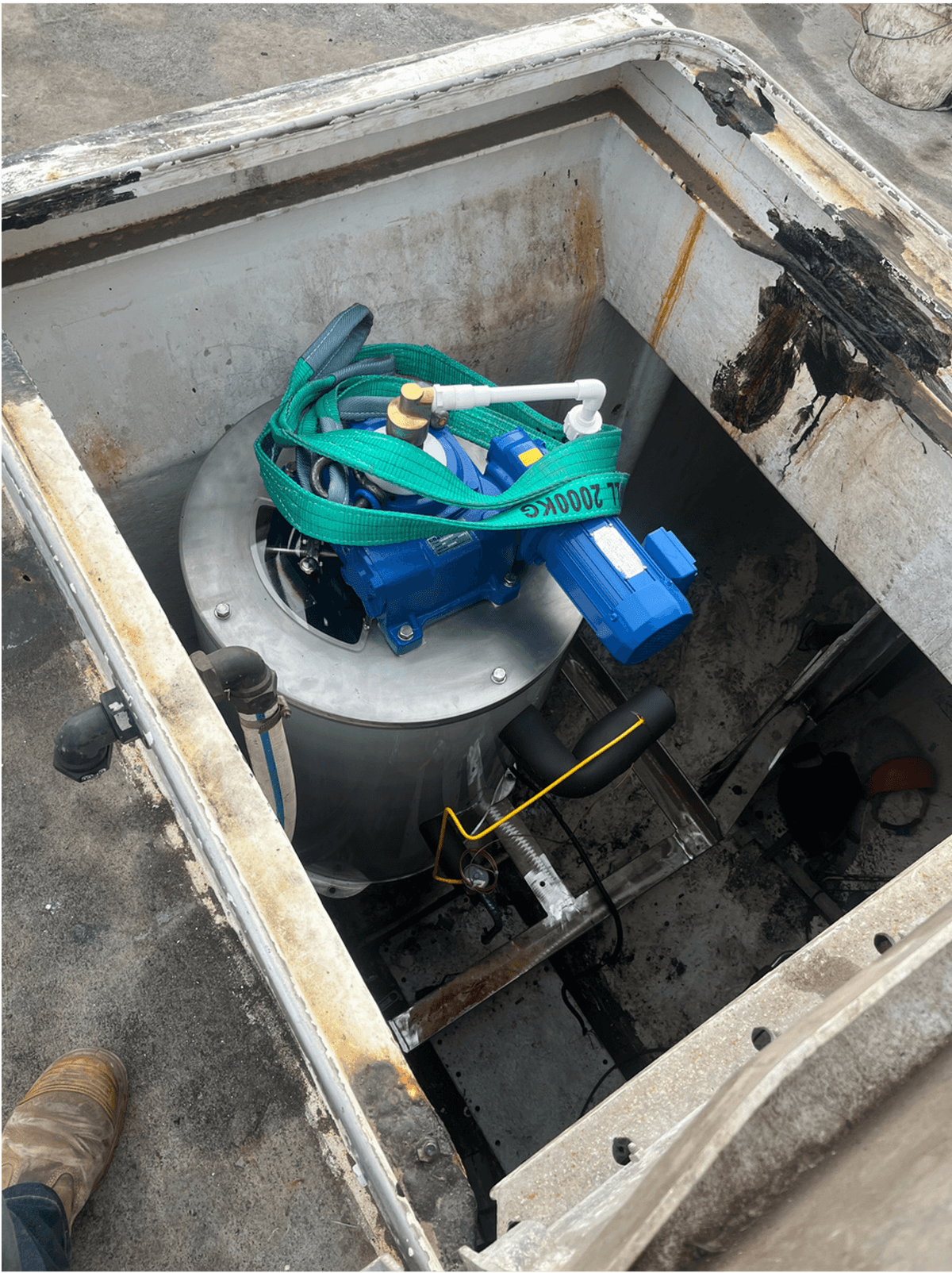
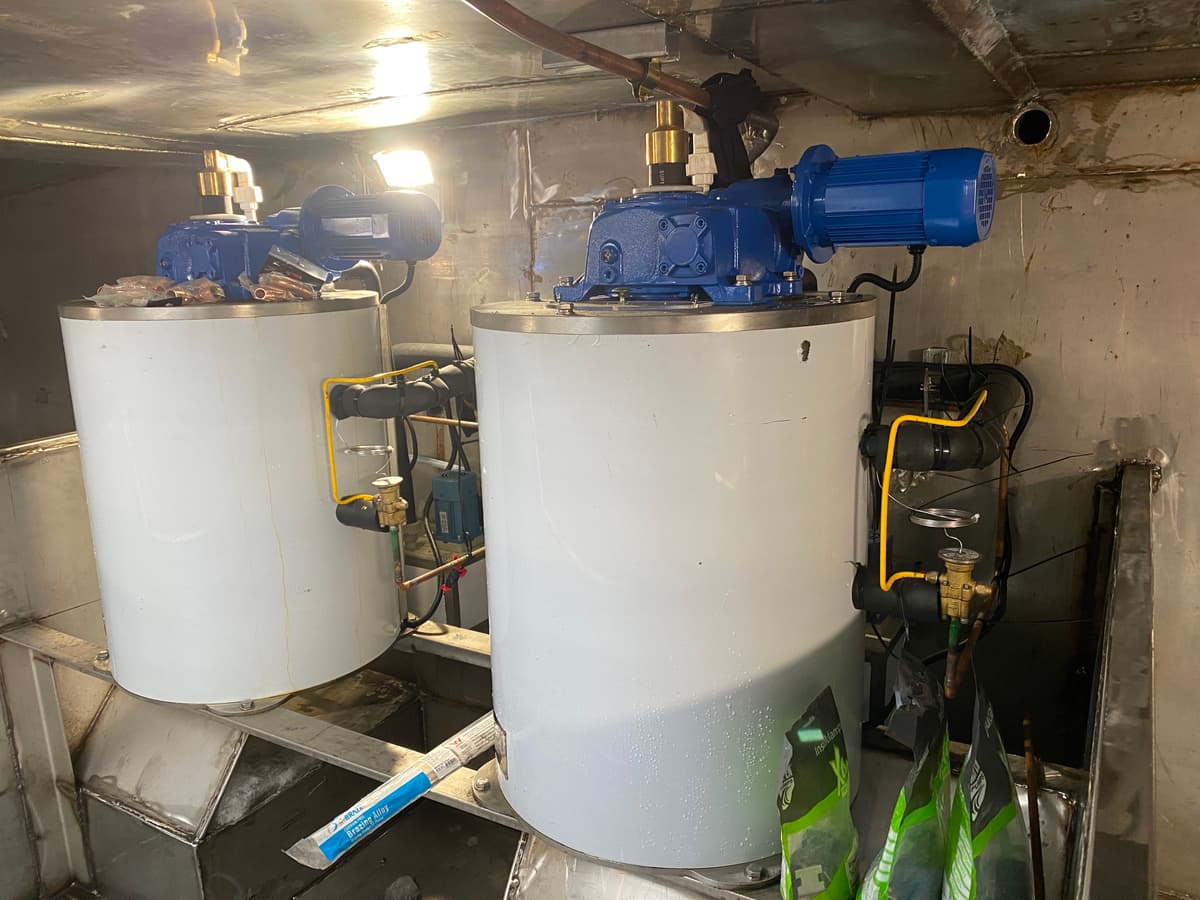
Fitting a new or replacement ice machine
A fit-out is planned around the boat as much as the machine. These are the parts of the job a quote should cover.
Where the ice head goes
Usually above the hold or ice room, so the ice drops straight in, with room around it for servicing. A machine below deck may need a chute or a conveyor, or the crew moves the ice by shovel.
Water
A seawater machine needs an intake, a seacock, a strainer and a pump, with piping made for seawater. A freshwater machine needs a feed with its own shut-off valve and filter.
Cooling
A machine on a fishing boat is usually cooled by seawater, through a condenser built for it.
Power
Its own supply, sized to the machine's nameplate and within the voltage range the maker allows, wired by an electrician.
Mounting
Fixed to hold in a seaway, with stainless fastenings, and vibration mounts where the maker calls for them.
Start-up
The machine is started and adjusted to the maker's procedure, its output is checked, and the crew is shown how it runs and what they look after.
Installation typically takes 2 to 5 days depending on system size and vessel modifications needed. We coordinate with your schedule and work efficiently to minimize boat downtime. For urgent installations before fishing season, we can expedite the process.
Survey. Under Marine Order 503, removing, repositioning, installing or modifying a refrigeration system on a vessel with a certificate of survey is one of the changes the order lists, and after a listed change the vessel must not operate until a new certificate of survey is issued. From 1 December 2026 the 2026 order adds an exception, where the vessel's structural or stability design approval was based on assumptions and calculations that the change leaves valid. If there is no such approval on file for the boat, the change is listed. Ask your accredited marine surveyor which applies to your boat.
Under Marine Order 504, as at November 2026, the holder of a certificate of operation tells AMSA in writing at least 14 days before an alteration or replacement that affects the vessel's electrical system, machinery or associated systems, stability, watertight integrity or equipment type. Talk to your surveyor before the work is booked.
Refrigerant licence. Work that involves handling a scheduled refrigerant, such as an HFC, or a part of the equipment that could release one, needs a refrigerant handling licence. That includes installing, commissioning and servicing. The Australian Refrigeration Council issues the licences, and you can check a technician's at Look for the tick.
What drives the price. The machine's type and output, whether it replaces a machine on existing mounts and pipework, the water and power work the boat needs, and how easy the space is to reach. Your quote is the price.
More in the guides
When the ice machine stops or makes less ice
Most breakdowns show up as one of the changes below. Each has more than one possible cause, on the machine or in how the ice is stored, and finding which one is a technician's job. Write down what you see, then call.
| What you notice | What it can come from | What to write down |
|---|---|---|
| No ice at all | No water reaching the machine, such as a closed valve or a blocked strainer, or a fault in the drive, the controls or the refrigeration. | Whether it runs at all, any code or light on the display, and whether water is reaching it. |
| Less ice than usual | Warm seawater or a hot machinery space, low water flow, scale on the evaporator, a fouled condenser, or a refrigeration fault. | How much it makes now against usual, since when, and the seawater temperature if you know it. |
| Wet, soft or clumped ice | Seawater ice looks wetter than freshwater ice even when it is cold. A change can come from the water feed or the refrigeration, or from storage: a hold or bin that does not drain, or ice kept too long. | Whether the ice is wet straight from the chute or only after storage, and how long it was stored. |
| It stops, or shows a fault code | A safety control has stopped it, such as a motor overload or a low water or pressure switch. The manual for the model says what each code means. | The code exactly as shown, what the machine was doing, and how many times it has stopped. Do not keep restarting it to clear the code. |
| Water leaking | A worn seal, a water level set too high, a blocked drain or a loose fitting. | Where the water appears, whether it is there while the machine runs or when it is stopped, and whether it is near anything electrical. Water near electrics means stop and call. |
| New noise or vibration | Wear in the drive, such as the bearings or the gear reducer, a loose mounting, or ice building up where the blade turns. | Where it comes from, when it happens, and what changed beforehand, such as rough weather, a refit or a lay-up. |
| The circuit breaker trips | Finding the cause is work for a technician, and for the wiring, an electrician. | When it tripped and what the machine was doing. Leave it off and call, as the warning at the top of this page says. |
What the crew can check
These are things the crew can see from outside the machine, without opening anything. Write down what you find.
- Whether the handle of the water supply valve or seacock shows it open.
- Whether weed or debris shows in the seawater strainer, where it has a clear sight bowl.
- If the machine is running, whether water is coming out of the overboard discharge.
- Whether the bin or hold is full. Most machines stop when the ice reaches a level sensor.
Clearing a strainer or opening any part of the water system follows the vessel's own maintenance procedure. Anything inside the casing, the control box or the refrigeration is for a technician.
What the technician does
We start from what you have written down. Where the machine can run safely, we check its output against its rating, then work through the water, the drive, the controls and the refrigeration. Refrigerant is not used up, so a low charge means a leak or a short charge when the machine was installed. A leak is found and repaired before the system is recharged.
Before you call: the nameplate, the manual and the record
We service all major marine ice machine brands including Kobol, Scotsman, Manitowoc, Icematic, Hoshizaki, and other commercial marine systems. Our technicians are trained on both saltwater and freshwater systems from various manufacturers. We supply genuine parts and components for all major marine ice machine brands. We stock commonly-needed parts and can source specialised components quickly. Even if your brand isn't listed, we likely have the expertise to service it.
Parts are ordered by make, model and serial number, from the machine's nameplate. Where the refrigeration sits apart from the ice head, the condensing unit has its own model number, so note both.
Keep the manual on board with the service records: it lists the fault codes and the crew's own checks. If it is missing, ask the maker or supplier for a copy, quoting the make, model and serial number.
Servicing an onboard ice machine
An onboard machine usually needs a technician's service at least twice a year, and more often where the water leaves scale. Check the manual for yours. We agree a schedule with you, planned around your season. We've maintained systems operating reliably for 20+ years with diligent care.
A service usually includes
- Cleaning, descaling and sanitising the evaporator and the water system.
- Checking the blade or scraper, the bearings and the drive, and greasing them where the maker asks.
- Cleaning the seawater strainers and checking the pump and the flow.
- Checking the condenser for scale and fouling, and its anodes where it has them.
- Corrosion inspection and treatment.
- Checking and tightening the electrical connections, and checking that the safety controls work.
- Checking the refrigeration system's pressures, and looking for leaks.
- Checking how much ice it makes and the quality of the ice.
- A service report with photos, listing the work done and the parts that are due.
Maintenance contracts available with discounted rates for commercial operators. Contact us for customized service schedules.
Between services, have one person look at the machine each day: the size of the flakes, how much ice it is making, any new noise, and whether the seawater strainer is clear. Write down what changes, and bring it to the next service or the next call.
East Gippsland ports
We work on fishing vessels at these ports. Each town page says what else ABL does there.
In 2021 Lakes Entrance was home to the largest commercial fishing fleet in Victoria. In 2020 the 36 Commonwealth-licensed fishing boats based there landed more than 3,000 tonnes of seafood.
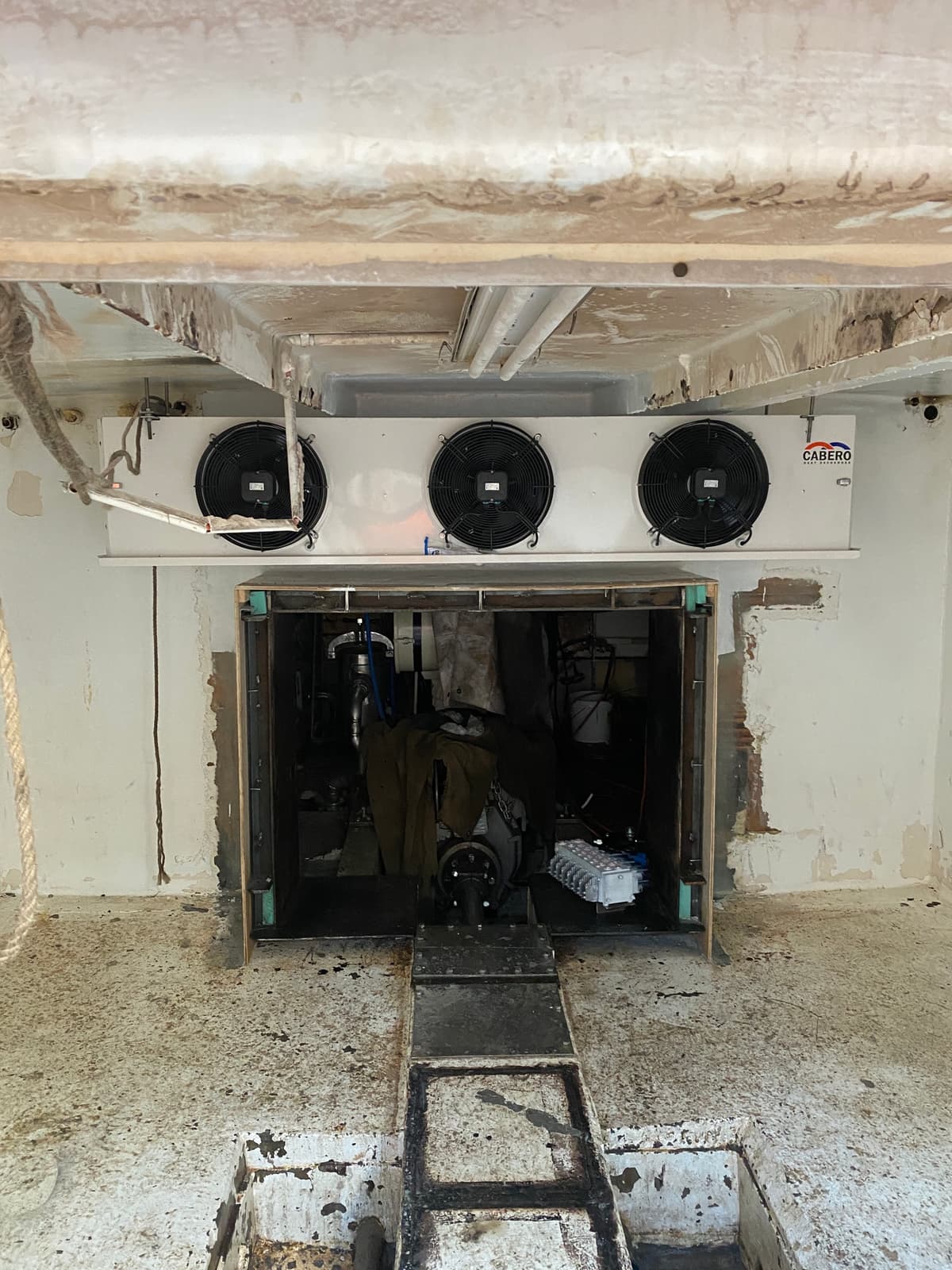
Talk to ABL about your boat's ice machine
Call the emergency line for a breakdown. For a new or replacement machine, or planned servicing, get a quote.