
Restaurant cold storage layout: where refrigeration goes in a kitchen
Plan refrigeration across a commercial kitchen: one-way flow from delivery to service, raw and ready-to-eat apart, where fridges stand, and a checklist.
Last updated
Lay out a restaurant's cold storage along one direction of travel: deliveries in, into cold storage, out to preparation, then cooking and the service line, with waste leaving by its own route, so raw and ready-to-eat food do not have to cross. Then put each fridge where staff use it, away from heat and sun, with room around it for air, cleaning and service.
How to use this guide
How should food move through the kitchen?
In one direction. Food that moves from receipt to storage to preparation to service, without crossing back over the layout, keeps cross-contamination between raw and ready-to-eat food to a minimum. Raw handling sits apart from where finished food goes out, preparation sits apart from wash-up, chemicals and garbage, and staff should not have to walk through one area to reach another.
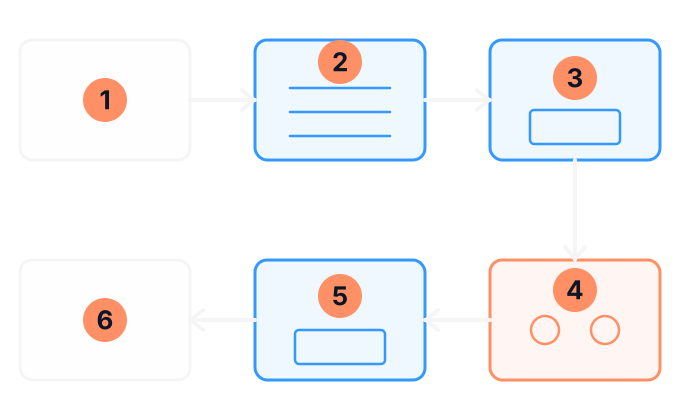
- Receiving: where chilled and frozen deliveries are checked.
- Cold storage: the coolroom, freezer and storage cabinets, with raw food below or apart from ready-to-eat food.
- Preparation: under-bench fridges and prep counters, with raw and ready-to-eat preparation kept apart.
- Cooking: the heat source. Refrigeration next to it or under it needs the most care.
- Service line: reach-ins and prep counters stocked for the busiest hour.
- Waste and wash-up: out by their own route, not back through storage or preparation.
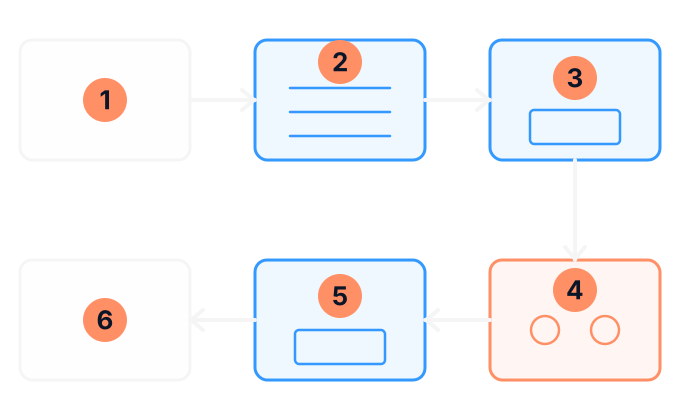
| Zone | Refrigeration there | Plan for |
|---|---|---|
| 1. Receiving | None, but cold storage should be close. | Someone on site to check that chilled food arrives at 5°C or colder and frozen food frozen hard, and a short trip into storage. |
| 2. Cold storage | Coolroom, freezer, storage cabinets. | Enough space for the largest delivery, with food on shelves off the floor, raw below or apart from ready-to-eat, and air moving around it. |
| 3. Preparation | Under-bench fridges, prep counters. | A fridge within reach of each prep area, so food does not sit out while someone walks to the coolroom, and raw and ready-to-eat prep kept apart. |
| 4. Cooking | Refrigerated chef bases, if any. | Heat. Keep other refrigeration away from it, and follow the maker of both pieces of equipment for anything under or beside a cooktop. |
| 5. Service line | Reach-ins, prep counters, display cabinets. | What the line uses in the busiest hour, restocked from storage before service, with doors opened as little as possible. |
| 6. Waste and wash-up | Usually none. A refrigerated garbage room is not required, but some businesses need one to stop odour. | A route out that does not cross storage or preparation. |
How do you keep raw and ready-to-eat food apart in cold storage?
- Store raw meat and seafood below ready-to-eat and cooked food, or in a separate cabinet, so juices cannot drip onto it. Thaw frozen food on the bottom shelf too.
- Cover food with lids, foil or film, in food-grade containers.
- Label the tray or container, not the food, and date it so you know how long it has been stored.
- Keep food off the floor, on shelves, and away from chemicals and cleaning gear.
- Rotate stock so older food is used first, and nothing goes past its use-by date. As a guide, unpackaged ready-to-eat food that needs refrigeration is not kept more than 5 days, and food with raw or lightly cooked egg not more than 24 hours.
Where those rules meet the shelves inside one coolroom is covered in the guide to organising cold storage for stock access and food protection.
What temperatures does the law set?
Under Food Standard 3.2.2, potentially hazardous food is stored at 5°C or below, or 60°C or above, unless the business can show another temperature is safe, and frozen food has to stay frozen hard. The Code sets no freezer temperature, and Safe Food Victoria advises keeping frozen food at minus 15°C or colder. Check the food with a probe thermometer rather than trusting the fridge's own display, as Safe Food Australia, the guide to Standard 3.2.2 (opens in a new tab), explains. Food out of the fridge for preparation or service follows the 2-hour/4-hour rule (opens in a new tab), which is a guide, and cooked food that is cooled has to meet the Standard's two-stage cooling times, covered in the guide to cooling cooked food and choosing the equipment.
How much refrigeration does the line need during service?
There is no rule of thumb in litres per cover. Your own busiest service sets it. Standard 3.2.3 (opens in a new tab) asks for adequate space for what you do, and its guidance counts refrigerated space for the volume of food you hold. Plan the line from the busiest hour you trade:
- List what the line uses in that hour, and what it ran out of the last time you were busy.
- Restock from storage before service, so doors at the line open for service and not for refilling.
- Do not overload a fridge: it needs room for air to move around the food. A storage fridge is built to hold food already cold, not to cool large amounts of hot food.
- Keep doors shut between uses. Every opening lets heat in and works the refrigeration harder.
- Put the fridge at the station that uses it. Food carried a long way from storage sits out of temperature control.
Bigger is not always better for running costs, so size for what you need now and what you plan, not the largest unit that fits. Whether upright or under-bench suits a station is covered in the guide to upright versus under-bench commercial refrigeration.
Where can a fridge stand, and what does it need around it?
A self-contained fridge throws its heat into the room around it, so where it stands decides how well it holds temperature and how long it lasts. Each maker sets its own figures, so the table gives the usual range and the manual for your model decides.
| Check | Why it matters | What to allow |
|---|---|---|
| Heat and sun | Heat from ovens, fryers and grills, direct sun or warm draughts makes a fridge work harder and can push food over 5°C. | Distance or a heat shield between cooking equipment and a fridge, with the cooking equipment maker's clearances followed as well. |
| Room temperature and climate class | A cabinet is built to hold temperature up to a stated room condition, its climate class, shown on the rating label. Under Australia's energy rules, the test room for class 3 is 25°C, for class 4 is 30°C and for class 5 is 40°C. | A room of up to about 24 to 30°C for many cabinets. The rating label and the manual give the limit for yours. The guide to commercial fridge climate classes goes further. |
| Ventilation | In a small, closed room the heat builds up, the compressor overheats and power is wasted. | Keep the grilles clear, and stack nothing on or in front of the cabinet. |
| Clearances | The condenser needs air in and out, and a technician needs to reach it. | From none at the sides of some uprights to 150 mm from walls, and up to 500 mm above a top-mounted unit. The manual decides. |
| Cleaning access | Floors under and behind equipment have to be cleanable. | Castors and flexible services for equipment you move. 150 mm legs or a plinth for equipment you do not. |
| Drainage | Remote systems and some self-contained cabinets drain condensate and defrost water, which must not reach food. | Drain lines are not run above food areas. |
| Power | A fridge needs a reliable supply. A fridge that is wired in, and any new circuit, is work for a licensed electrician. | RCD protection, and its own circuit with no extension leads or adapters where the manual asks for one. |
| Condensing units | Where a coolroom or remote cabinet has its refrigeration outside, it needs good airflow and access, and should not disturb neighbours. | Condensing units outside the building, where they can be cleaned and serviced. |
Can you rearrange a shop or kitchen without disrupting the refrigeration?
Usually, if you plan the move around what each cabinet needs where it lands. Before you move anything:
- check the new spot against the placement table: heat, sun, clearances, a drain where one is needed, and a power point within reach without an extension lead
- move cabinets upright. A cabinet that has been laid down or tipped usually has to stand upright for a few hours, often three, before it is switched on. Check the manual for yours
- let a cabinet reach its temperature before you load it
- leave service access clear, and keep the condenser grille unblocked
- leave anything with remote refrigeration, such as a cabinet piped to a condensing unit, to a refrigeration technician, because moving it means handling refrigerant
Work that involves handling a scheduled refrigerant needs a technician licensed by the Australian Refrigeration Council (opens in a new tab).
Does a new takeaway menu change your refrigeration?
It can. The space a kitchen needs depends on the volume and type of food it handles, so new items that need refrigeration, such as cooked rice and pasta, cut fruit and vegetables, sandwiches, pizza and sushi, cream and fresh custard, egg dishes, seafood and meat, need cold space to match. Ask of each new item:
- where it is stored before and after preparation, and whether it is raw or ready-to-eat
- whether it is cooked and cooled ahead, which needs fast cooling as well as storage
- whether it is reheated, which is done quickly with the right equipment, because a bain-marie is built to hold food hot, not to reheat chilled food
- whether the line needs a prep counter for it during service
In Victoria some processes, such as sous vide cooking, bring a food safety program into play for a class 2 food service business. Your council's environmental health team can tell you what your menu means for your business.
What changes for an aged-care kitchen fit-out?
The refrigeration is ordinary food-service equipment, but the food safety rules are stricter, because the people eating are more vulnerable. In Victoria an aged-care residential facility is a class 1 food premises (opens in a new tab), which needs a food safety program with a yearly audit. For the layout, that usually means:
- room for many small, dated batches with short lives: opened ready-to-eat food generally used within a day, sliced meat within a day, and batch-made supplements within 48 hours
- cooling equipment, such as a blast chiller, where food is cooked and chilled ahead, with the cook-chill process itself validated
- cold storage close to where texture-modified food is made and served, so it spends little time out of the fridge
What changes when a cafe adds catering?
More food is made ahead, in bigger batches, and travels. The national food safety guide uses exactly this case: a small cafe that starts making sandwiches and salads early for delivery later in the day, and finds its coolroom no longer has room for it all. Plan for:
- cold storage sized for the catering on top of the cafe, at the busiest point of the morning
- fast cooling for cooked food: shallow containers about 5 cm deep and a blast chiller, which cools far faster than a storage fridge
- cold transport at 5°C or colder, in insulated containers or refrigerated equipment, with raw and ready-to-eat food kept apart, including on the way from the kitchen to the van
- records: a caterer that makes ready-to-eat food from potentially hazardous ingredients is a category one business under Standard 3.2.2A, with records for receiving, storing and transporting food
In Victoria, catering off-site brings a food safety program into play for a class 2 business. Your council's environmental health team is the place to ask.
Kitchen refrigeration placement checklist
Who do you talk to about which part?
- Your council's environmental health team registers cafes, restaurants, takeaways and aged-care kitchens, and checks fit-outs. East Gippsland Shire suggests an onsite visit and floor plans (opens in a new tab) before any work starts.
- A building surveyor for a walk-in coolroom or freezer. South Gippsland Shire's fit-out guide (opens in a new tab) notes that installing one needs a building permit, and in East Gippsland private building surveyors issue building permits (opens in a new tab), not the council. Ask before work starts. The guide to converting a storeroom into cold storage covers permits in full.
- A refrigeration technician for coolrooms, remote systems and anything that involves handling refrigerant. ABL builds coolrooms, as our coolrooms page explains.
- A licensed electrician for any new circuit and any fridge that is wired in.
ABL's refrigeration work includes restaurant kitchen equipment and display fridges for cafes, restaurants and hospitality venues. Our hospitality refrigeration page explains how to book. Have your checklist in front of you when you call.
Sources (28)
- Food Standards Australia New Zealand: Safe Food Australia, Standard 3.2.3 chapter, fourth edition (opens in a new tab) Checked on 19 November 2026.
- Food Standards Australia New Zealand: Safe Food Australia, Standard 3.2.2 chapter, fourth edition (opens in a new tab) Checked on 19 November 2026.
- Food Standards Australia New Zealand: storing food safely, updated 1 October 2025 (opens in a new tab) Checked on 19 November 2026.
- Food Standards Australia New Zealand: receiving food, updated 30 September 2025 (opens in a new tab) Checked on 19 November 2026.
- Food Standards Australia New Zealand: cooling and reheating food, updated 30 September 2025 (opens in a new tab) Checked on 19 November 2026.
- Food Standards Australia New Zealand: the 2-hour/4-hour rule, updated 30 September 2025 (opens in a new tab) Checked on 19 November 2026.
- Food Standards Australia New Zealand: transporting food safely, updated 1 October 2025 (opens in a new tab) Checked on 19 November 2026.
- Food Standards Australia New Zealand: overview of food safety management tools, updated 1 October 2025 (opens in a new tab) Checked on 19 November 2026.
- Food Standards Australia New Zealand: safe food for older people, advice for businesses, updated 30 September 2025 (opens in a new tab) Checked on 19 November 2026.
- Safe Food Victoria: safe food preparation, storage and display, updated 19 June 2026 (opens in a new tab) Checked on 19 November 2026.
- Safe Food Victoria: classifications of food businesses (opens in a new tab) Checked on 19 November 2026.
- Safe Food Victoria: food safety programs, updated 30 June 2026 (opens in a new tab) Checked on 19 November 2026.
- Safe Food Victoria: local council registered food businesses, updated 29 June 2026 (opens in a new tab) Checked on 19 November 2026.
- East Gippsland Shire Council: food businesses and stalls (opens in a new tab) Checked on 19 November 2026.
- South Gippsland Shire Council: food business fit out guide, 2024 (opens in a new tab) Checked on 19 November 2026.
- East Gippsland Shire Council: building permits (opens in a new tab) Checked on 20 November 2026.
- Wyndham City Council: food premises design and construction guidelines, 2023 (opens in a new tab) Checked on 19 November 2026.
- Alpine Shire Council: food premises construction guide (opens in a new tab) Checked on 19 November 2026.
- Energy Rating: refrigerated cabinets, consumer information (opens in a new tab) Checked on 19 November 2026.
- energy.gov.au: refrigeration equipment guide for business (opens in a new tab) Checked on 19 November 2026.
- Greenhouse and Energy Minimum Standards (Refrigerated Cabinets) Determination 2024 (opens in a new tab) Checked on 19 November 2026.
- SKOPE: ReFlex series user guide, October 2021 (opens in a new tab) Checked on 19 November 2026.
- SKOPE: ReFlex one-door under-bench fridge and freezer user guide, May 2021 (opens in a new tab) Checked on 19 November 2026.
- Williams Refrigeration Australia: operating manual for upright and counter refrigeration (opens in a new tab) Checked on 19 November 2026.
- Bromic Refrigeration: instruction manual, GM1000 upright display fridges (opens in a new tab) Checked on 19 November 2026.
- True Manufacturing: installation manual, refrigerated food prep units (opens in a new tab) Checked on 19 November 2026.
- Australian Refrigeration Council: frequently asked questions (opens in a new tab) Checked on 19 November 2026.
- ABL Refrigeration: commercial refrigeration services (opens in a new tab) ABL's own page. Checked on 19 November 2026.
Related pages
- Organising commercial cold storage for stock access and food protection
Shelving and stock inside one coolroom.
- Cooling cooked food and selecting the right equipment
Blast chillers and the two-stage cooling times.
- Upright versus under-bench commercial refrigeration
Which cabinet suits each station.
Planning a kitchen fit-out or a change?
Call ABL with your checklist in front of you, or send an enquiry.
Filled in the record? Copy or print it first: it is not sent with a call or an enquiry.